Why I came back to Swiss Re
Three months after rejoining Swiss Re, some reflections on four years in a small company, what they taught me, and why an institution I already trusted was the right place to use it.
In June I rejoined Swiss Re as a Managing Director. I left in 2022, after five years there, and spent the time since in the smaller end of corporate life. Three months back is long enough for the novelty to have worn off and the reasons to have been tested a little, and I have been asked often enough why I returned that it seems worth writing the answer down.
The first thing to say is that I loved being there. I joined Group Underwriting in 2017, and in 2019 moved to Corporate Solutions, the commercial insurance arm, as a Chief Underwriting Officer. Corporate Solutions then was in a bad way. In 2019 it ran a combined ratio of 127.9% and lost $647m, and Andreas Berger had just come in as CEO to run a thorough turnaround of the business. I was part of the team he built to fix it. By 2021 the combined ratio was 90.6% and the unit made $578m; in 2022 it made $486m at 93.1%. From 2021 I ran technology and operations alongside underwriting, as Chief Information and Technology Officer. It was the most demanding and most satisfying work I had done, with people I trusted completely.
The turnaround was real and public, and I mention the numbers because Andreas instilled a real culture of targets and outcomes, not plans and explanations. What I took from it was how a large institution actually changes: through a team of people who agree on what matters, hold to it under pressure, and do a great deal of unglamorous work in the right order. We had a huge impact in a short time, and I enjoyed almost every day of it. The colleagues I worked with were people I admired then and admire more now, because I have seen over 20+ years how rare that combination of competence, candour and good humour is. Several of them are now friends rather than colleagues, which doesn’t show up in an annual report but is more personally valuable.
What a small company teaches
Leaving was still right. I wanted to find out what I could do without the machinery of a large group around me, and a much smaller company gave me that.
I learned things I had not known there were to learn. In a large company most of what a senior person does is manage: set direction, allocate people, review, decide. In a small one you cannot afford that. If the model needs building, you build it. If the data pipeline breaks, you fix it or you have no data. If a customer needs convincing, you get on the call. I went back to doing far more than managing, and found that leading through doing is a different and in many ways better discipline than leading through managing. People follow someone who is in the work with them, and you make better decisions when you have your hands on the thing you are deciding about. Some of what I have written here about iteration and getting value out of AI came directly from that.
Fundraising taught me something else. When you ask people for money on the strength of a plan, you discover very quickly how much of your thinking was borrowed confidence from the institution you used to work in. Every assumption gets tested by someone whose own capital is on the line. It is an education in clarity: what exactly are we doing, why will it work, what would make it fail. I would recommend it to anyone who has spent a career inside large companies, and I am grateful for it.
Why go back
There were several reasons this summer was the natural moment to move, and the personal ones are going to stay personal! The professional ones I share now because they’ve been tested over 3 months and they still hold true!
The first is a view about where impact comes from. Insurance is a heavily regulated business for a very good reason: it sells promises that must be kept years later, with other people’s money. A great deal of what makes a new entrant exciting in other sectors is precisely what regulators, rating agencies and clients are right to be cautious about here. Some things in insurance are genuinely better done by incumbents, with the balance sheet, the licences, the data and the client relationships that take a century to build. Having spent four years on the other side, I’ve learned that lesson in quite a hard way. It is a different route to impact, and for the problems I care about most it is a very powerful one.
The second is the institution itself. I have always admired Swiss Re’s culture: serious about risk, intellectually honest, long-term in a way that is rare in financial services, and highly collegial. I never stopped thinking of it as the standard against which I measured other places.
The third is the people. The trust built across those years with Swiss Re’s people did not stop when I left, and I feel very privileged to be invited back. Andreas now runs the Group, and many of the people I worked with at Corporate Solutions are around him. To be reunited with that team - particularly working for Kera McDonald, the Group CUO and my former colleague - felt like a real opportunity, and the first three months have been a reminder of why.
I came back with more than I left with: a great deal I learned by doing, a sharper sense of what large institutions can do that nothing else can, and a clear view of the problems worth spending the next few years on. That is what I intend to spend them on.
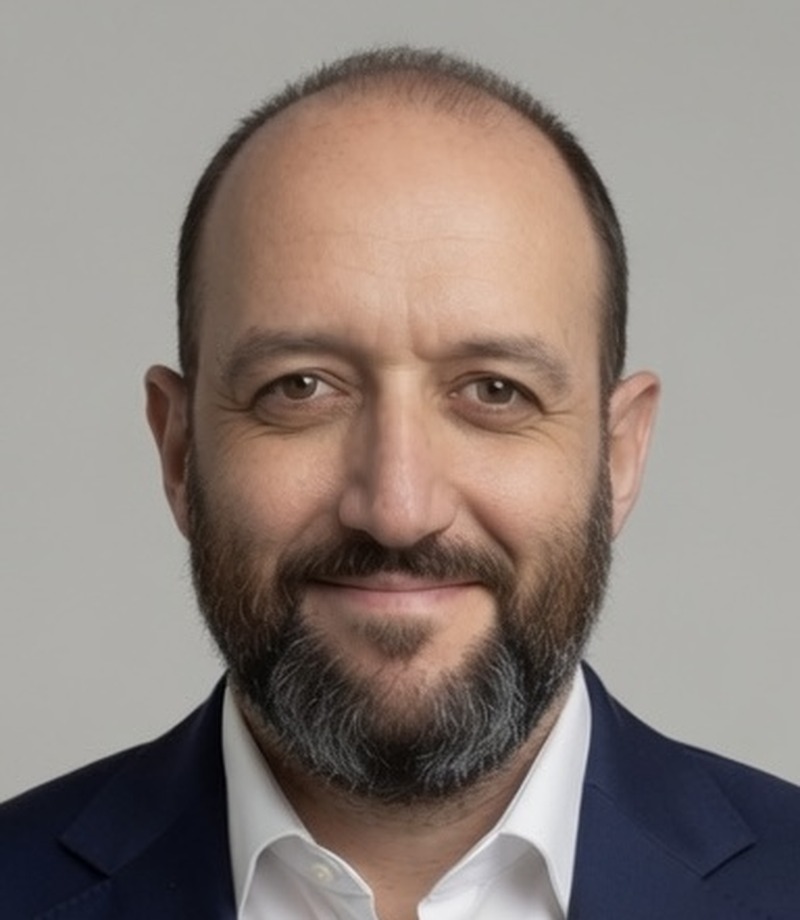
I work in insurance and write about artificial intelligence, risk and community — Jewish and British. This site collects the writing. More about me.