Why I am standing for the Security, Resilience and Cohesion division
I want British Jews to do more than feel secure enough to endure. I want us to live openly, confidently and joyfully, as the whole Jewish tribe.
I built Scroll & Stone because I wanted somewhere online that treated Jewish life as something to celebrate.
It tells the story of the Jewish tribe through the things we have made, the places we have lived, the food we eat, the music we sing and the people who have carried our story. Its timeline runs through Jewish history while empires rise and disappear around us. Its atlas travels from Jerusalem to Kaifeng. Its constellation places rabbis alongside writers, scientists, artists and builders. There are journeys through Jewish life across Islamic worlds and through the women who carried Jewish practice across generations.
The site ranges widely because the Jewish people do. I am an Orthodox Jew, but my synagogue contains only one part of the tribe. The tribe includes Progressive, Masorti, Orthodox, Charedi, atheist, agnostic and other Jews; Ashkenazi, Sephardi and Mizrahi Jews; religious and secular Jews; Jews by birth and Jews by choice; Jews whose families have been in Britain for generations and Jews who arrived last week. We disagree constantly, sometimes about matters each side considers fundamental. I strongly believe we remain one people, and take great joy and pride in our people’s history.
Scroll & Stone is my attempt to show what that belief looks like in practice. It is written from inside the tribe, with affection, pride and the occasional raised eyebrow. It starts with Jewish joy rather than Jewish grievance. The wider world is welcome to come in and look around, but we do not have to translate ourselves into somebody else’s categories before we are allowed to tell our own story.
It is also why I am standing in September’s by-election for the Board of Deputies’ Security, Resilience and Cohesion division. I have spent much of my adult life in Anglo-Jewish communal service. I chaired the Union of Jewish Students, was a leader at UJIA, founded Alei Tzion and now represent Ner Yisrael as a deputy. Alongside that communal work, I have held senior leadership roles at McKinsey, AIG and Swiss Re. What I found in each experience was the same instinct: people taking responsibility for one another, and building something they hoped would outlast them.
In May 2002, during my time at UJIA, I led the organisation of the Israel solidarity rally in Trafalgar Square. Israel was enduring a campaign of suicide bombings. At the same time, the false allegation that hundreds of Palestinians had been massacred in Jenin was spreading around the world.
Tens of thousands of British Jews filled the square. We carried British and Israeli flags, sang, and stood together across religious and political differences. The rally came out of fear, anger and the need to answer a lie, but it was not defined by any of them. It was full of Jewish confidence and collective joy. We responded to antisemitism by appearing in the centre of London as ourselves and refusing to let our enemies decide the terms on which Jews could be seen.
I want that community to flourish here, which asks more of us than safety alone. Guards, training and secure buildings are indispensable, especially now, and proper state funding for them is the minimum we should expect. But nobody would describe a family as flourishing because it had fitted a better lock to the front door.
Jewish life flourishes when a student can be visibly Jewish on campus without calculating the cost; when an employee can take time off for a festival without feeling awkward; when parents can send a child to a Jewish school with confidence; when a small regional community has the support to keep going; and when Jews can argue with one another without outside institutions deciding which of us count as acceptable Jews.
The Security, Resilience and Cohesion division touches all of this. I will focus on three places where British Jews need practical change: workplaces, public institutions and universities. At work, Jewish employees should be able to live visibly as Jews, and as Zionists, without professional penalty or awkwardness. Public bodies and professional organisations have responsibilities to Jewish citizens; too often, they manage the disruption rather than addressing those causing it. Universities must be places where Jewish students can learn, organise and live visibly as Jews without calculating the cost. As former Chair of UJS, I care deeply about supporting its work and confronting the environments in which antisemitism is fomented.
Across all three, the rules governing institutions are often more useful than another expression of concern, if we read them closely and insist that they are applied. My experience in senior leadership at McKinsey, AIG and Swiss Re has taught me how large organisations make decisions: where responsibility lies, which processes matter, and how to pursue a clear ask until it produces an outcome. Our commitment to Britain is unconditional. We seek its welfare because it is ours, and the state owes British Jews the safety, freedom and equal standing it owes every citizen.
Resilience means more than recovering from the next incident. It means strengthening the ordinary structures in which Jewish life happens, and giving communities the confidence and practical support to act before a crisis. The Board has roughly three hundred deputies across the country. They should not be treated as an audience for work done in London. A deputy knows the local council, university, school, police force and civic organisations in a way no central office can. The Board should equip deputies to act in its name, listen to what they learn and bring that local knowledge into national work.
Cohesion begins inside the community. It cannot mean asking every Jew to agree, because we never have and never will. It should mean that our arguments do not dissolve our responsibility for one another. The Board should work with anyone, of any denomination or political view, who is working for the success of British Jewry. It should defend the bond with Israel held by the overwhelming majority of our community without appointing itself referee of Israeli politics. It should celebrate the whole tribe without demanding that anybody become less fully themselves.
It also means approaching our neighbours with confidence. British Jews have helped to build this country, and we should work openly with people of every faith and none who want it to succeed. That relationship is strongest when nobody has to arrive apologetically. Cohesion is something we create together as equal citizens, not permission granted to us in return for making ourselves unobjectionable.
Underneath this is a broader view of what the Board should be. It should meet government and public institutions with dignity, and stop treating the fact of being received as an achievement. Access matters only when it produces a result. It should measure itself by whether Jewish life is freer, safer and stronger, and report honestly on what changed. It should trust deputies with responsibility instead of treating them as spectators. Above all, it should concern itself with what British Jews are trying to build as well as what we fear.
These are demanding standards. I expect to be held to them too. If elected, I will bring the habits I set out in my manifesto: precision about the rules and the ask; discipline in pursuing one argument until it produces a result; and respect for deputies as the Board’s representatives in their own communities. I will ask, repeatedly and perhaps irritatingly, what changed for British Jews that would not otherwise have changed.
My ambition is simple to describe, even if it will take serious work to realise. I want British Jews to be full members of British society and fully proud Jews: secure enough to stand openly, resilient enough to build for the next generation, and cohesive enough to recognise the family resemblance across all our differences.
That is the community I have tried to celebrate through Scroll & Stone. It is the community I want to serve on the Security, Resilience and Cohesion division. I would be grateful for the support of my fellow deputies in September.
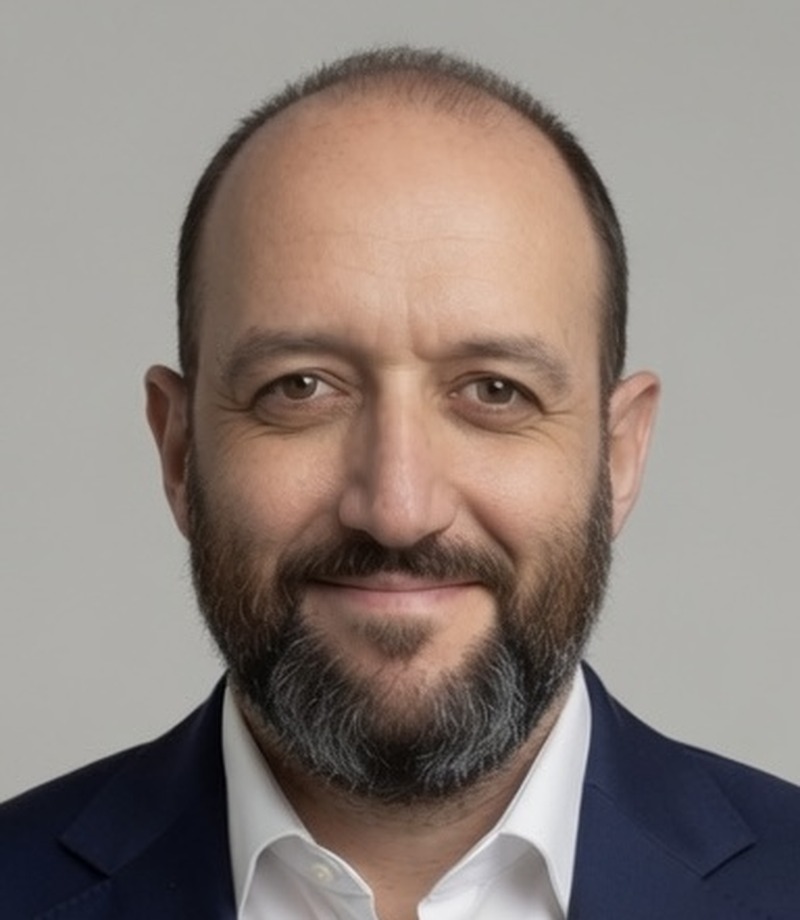
I work in insurance and write about artificial intelligence, risk and community — Jewish and British. This site collects the writing. More about me.